新商品入荷しました!
As of February 17, 2025, Honda has been actively pursuing strategic initiatives to enhance its position in the automotive industry. Notably, in December 2024, Honda entered into merger discussions with Nissan, aiming to create the world's third-largest automaker. However, these talks were officially terminated in February 2025 due to unresolved differences, including Honda's proposal to make Nissan a subsidiary. BUSINESSINSIDER.COM In terms of product offerings, Honda continues to innovate with models like the 2025 Honda Civic Sport Touring Hybrid. This vehicle features a 2.0-liter Atkinson-cycle engine paired with a 181-hp permanent-magnet traction motor, delivering a combined 200 hp and 232 lb-ft of torque. It boasts an impressive EPA fuel economy of 48 mpg combined, positioning it as a strong competitor in the hybrid segment. WSJ.COM Additionally, Honda has been focusing on electrification, with plans to produce over 2 million electric vehicles annually by 2030, targeting 40% of new car sales to be EVs and FCVs, and transitioning entirely by 2040. This strategy underscores Honda's commitment to sustainable mobility solutions. REUTERS.COM For the most current information on Honda's vehicle lineup and corporate developments, you can visit the official Honda Japan website:
CAR SHOP
As of February 17, 2025, Honda continues to advance its engine technology across various vehicle segments. The 2025 Honda Civic Sport Touring Hybrid exemplifies this progress, featuring a 2.0-liter Atkinson-cycle engine paired with a 181-hp permanent-magnet traction motor. This combination delivers a total of 200 hp and 232 lb-ft of torque, achieving an impressive EPA fuel economy of 48 mpg combined. This positions the Civic Hybrid as a strong competitor in the hybrid segment, offering a balance of performance and efficiency.

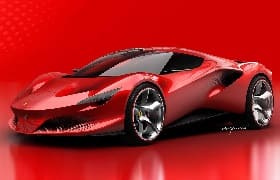
Honda cars are known for their sleek and modern body designs, combining both aesthetics and functionality. Here's an overview of the general design elements typically found in Honda vehicles: Aerodynamic Shape: Honda designs tend to emphasize smooth, flowing lines to improve aerodynamics and fuel efficiency. The front grille and rear end of many models are sculpted to reduce drag. Front Grille and Headlights: The front of Honda vehicles often features a bold, angular grille, with sharp, narrow headlights. Some newer models have LED headlamps with an angular or "signature" lighting design. Crisp, Angular Lines: Honda’s bodywork often includes sharp, defined creases that create a more dynamic and athletic look. These lines can be seen along the side panels and often extend from the front to the rear of the car, giving it a sense of motion even when standing still. Rear Design: Honda vehicles often have smooth and compact rear designs with integrated spoilers or tail lights. For example, the Civic features a well-structured rear with a stylish diffuser, while the Accord has a more sophisticated, understated rear with horizontal taillights. Minimalist and Functional Interiors: While this doesn’t directly impact the body, Honda vehicles often feature clean, functional cabin layouts that emphasize space efficiency and ergonomic design. Sporty Variants: Models like the Civic Type R or the Honda NSX (supercar) showcase more aggressive and performance-oriented body designs, with features like wider wheel arches, larger air intakes, and sporty aerodynamic elements such as rear diffusers and spoilers. Sustainability: In recent years, Honda has also focused on electric and hybrid vehicles, so their body designs for such models often aim to combine eco-friendliness with futuristic styling. For instance, the Honda e electric car has a retro-inspired yet modern design, with a compact and rounded body.
1. Inline-4 Engines Honda is famous for its inline-4 engines, which are used in many of its compact and midsize cars. These engines are known for their balance of power, efficiency, and smooth operation. Examples include: Honda Civic 2.0L I4: Common in the standard and sport models. Honda Accord 1.5L Turbo I4: A turbocharged variant for more power and efficiency. Honda CR-V 1.5L Turbo I4: Used in their compact SUV, offering great fuel economy. 2. V6 Engines For larger models like the Honda Accord and Pilot, Honda uses V6 engines. These engines deliver more power, making them suitable for bigger vehicles and offering a smoother driving experience compared to smaller engines. Honda Accord 3.5L V6: Available in higher trims, offering more power for performance and towing capability. Honda Pilot 3.5L V6: Powers the midsize SUV, offering a good mix of power and fuel efficiency for a larger vehicle. 3. Turbocharged Engines Turbocharging is used to boost engine power without increasing the engine size significantly. Turbocharged engines are a part of Honda's push for better fuel economy without sacrificing performance. Honda Civic Type R 2.0L Turbocharged I4: A high-performance engine used in Honda's sportiest models, offering around 306 horsepower and 295 lb-ft of torque. 4. Hybrid Powertrains Honda has embraced hybrid technology, combining an internal combustion engine with an electric motor to offer improved fuel efficiency while still providing ample power. Honda Insight Hybrid 1.5L I4: Combines a 1.5L I4 engine with an electric motor, achieving excellent fuel efficiency. Honda CR-V Hybrid 2.0L I4: A hybrid powertrain providing better fuel efficiency compared to the standard CR-V engine. 5. Honda VTEC (Variable Valve Timing and Lift Electronic Control) Honda is well-known for its VTEC system, which allows the engine to switch between different camshaft profiles for better performance and efficiency. It provides a boost in power at higher RPMs for a more dynamic driving experience. VTEC-equipped engines are often found in the Civic Si, Civic Type R, and other performance models. This allows them to provide both excellent fuel efficiency at lower speeds and higher power when pushed.