Ghatasthapana
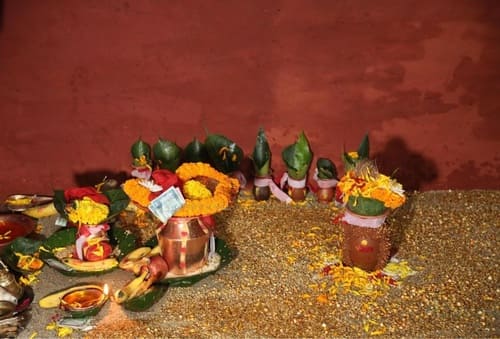
Ghatasthapana is the first day of Dashain when people sow the jamara. Kalasha or a pot is symbolized as Durga and filled with holy water and covered with a cow dung and sewn with barley seed. The kalasha is placed in the center of a rectangular sand block. The ingredients used to sow jamara are wheat and maize seeds. The person who puts jamara worship by inviting Durga to bless the vessel. The ritual is performed on the day of Ghatasthapana in a certain auspicious time determined by astrologers.
Phulpati
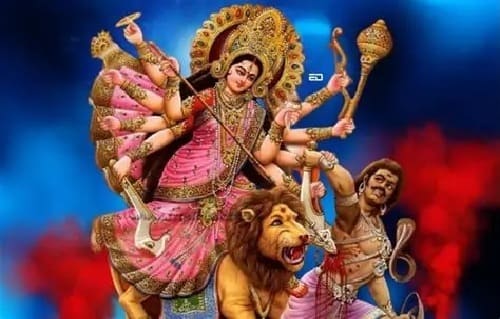
The Nepali Hindus celebrate Phulpati on the seventh day of Dashain. The story of Dashain is about the triumph of Goddess Durga over the demon Mahisasur.’ Over 10 days, the war waged between the two ended with the victory of Goddess Durga.
Maha Ashtami
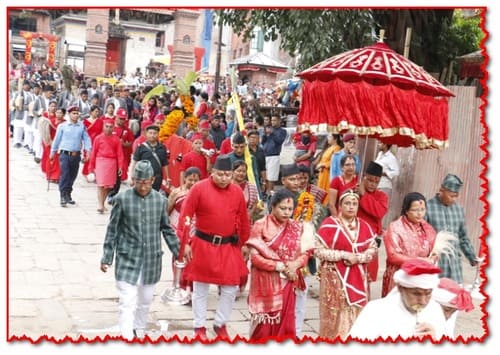
The eight day of Navaratri or Durga Puja celebrations is known as Durgashtami, or Durga Ashtami. It is also known as Mahashtami and is one of the most auspicious days according to Hinduism. It falls on bright lunar fortnight Ashtami tithi of Ashvina month according to the Hindu calendar.
Maha Nawami

The ninth day of the Bada Dashain festival is being observed as Maha Nawami throughout the country on Monday.Since early morning today, a large number of devotees visit the temples of goddesses Mahakali, Laxmi and Durga Bhagawati.
Bijaya Dashami

The most important day in Dashain is the Bijaya Dashami. It is the tenth day of Bijaya Dashami or Dashain. On this very day it is belived that Durga killed the demon Mahesasura and Ram killed Ravana. This day is famous for putting tika and jamara on the head. On this day, a mixture of rice, yogurt and vermilion is prepared and called as tika. Elders put this tika and jamara which is sown in the day of Ghatasthapana on the forehead of younger relatives to bless them with healthy, wealthy and prosperity. The elders spell the mantra or blessing while putting tika